Apple Unveils M3 Chip Family with Revolutionary Technologies for Mac
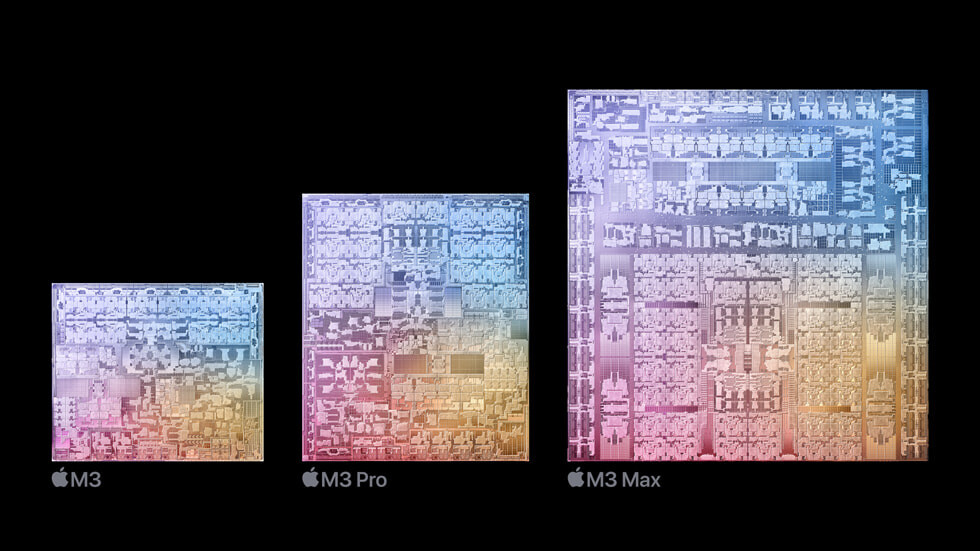
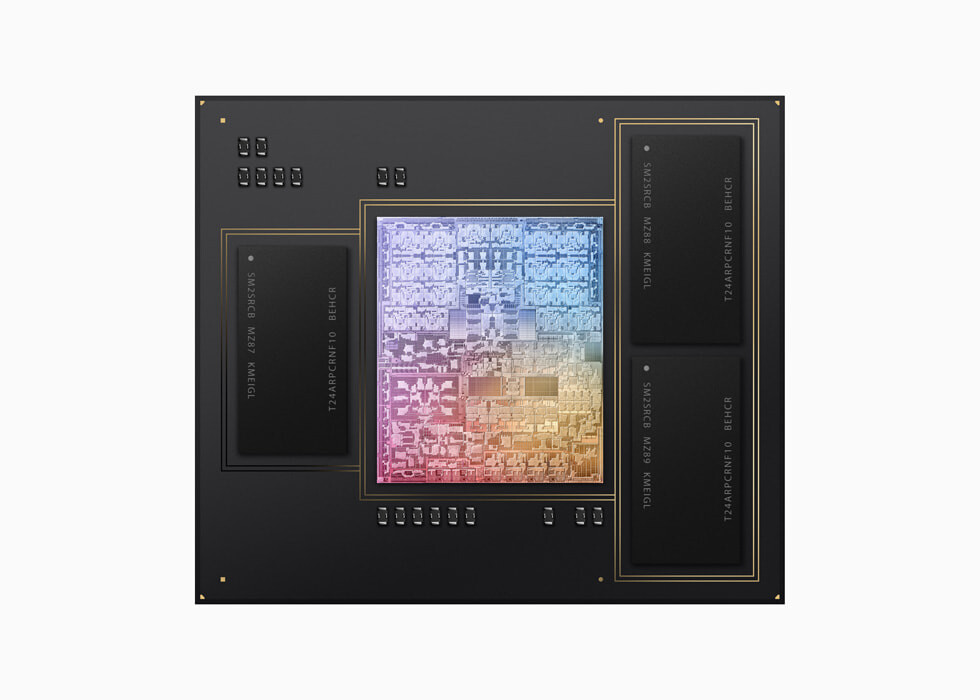
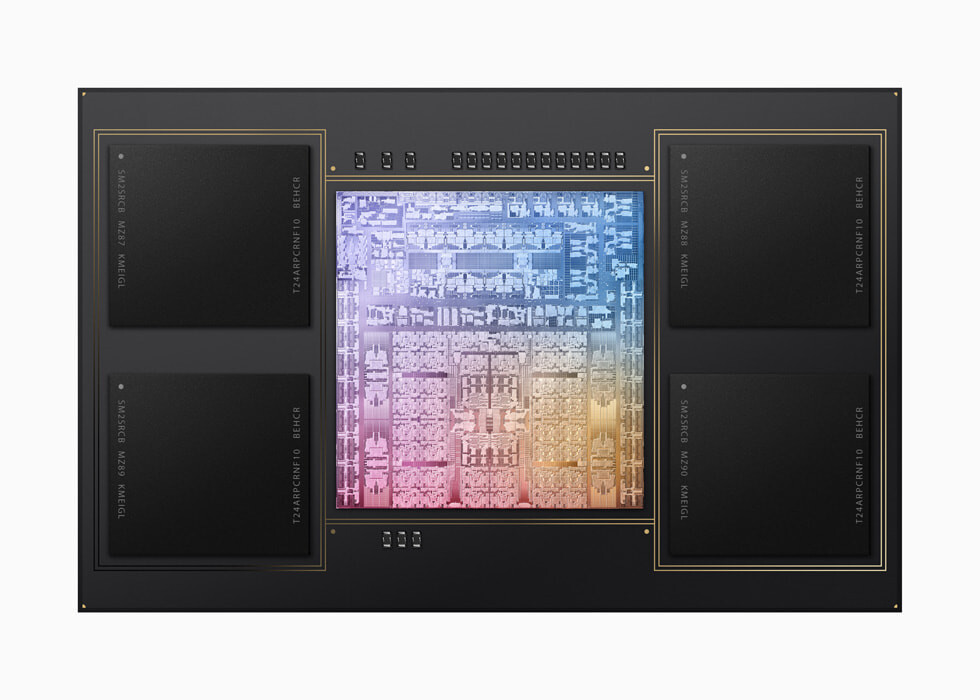
Apple has announced the launch of the M3, M3 Pro, and M3 Max chips, which incorporate groundbreaking technologies to enhance performance and introduce new capabilities for Mac computers. These chips are the first to be built using the industry-leading 3-nanometer process technology, enabling more transistors to be packed into a smaller space, resulting in improved speed and efficiency. The M3 family of chips represents a significant advancement in Apple silicon for Mac, surpassing the previous M1 chip family.
Revolutionary GPU with Dynamic Caching and Advanced Rendering Features
The M3 family of chips features a next-generation GPU that represents a major leap forward in graphics architecture for Apple silicon. The GPU is faster and more efficient, introducing a new technology called Dynamic Caching. This technology optimizes the use of local memory in real time, resulting in improved GPU utilization and enhanced performance for demanding professional applications and games. The M3 GPU also introduces hardware-accelerated ray tracing and mesh shading to Mac for the first time, enabling more realistic and visually complex scenes. Rendering speeds are now up to 2.5 times faster compared to the M1 chip family. Additionally, the M3 family of chips includes a new media engine with support for AV1 decode, delivering more efficient and high-quality video experiences from streaming services.
Faster and More Efficient CPU
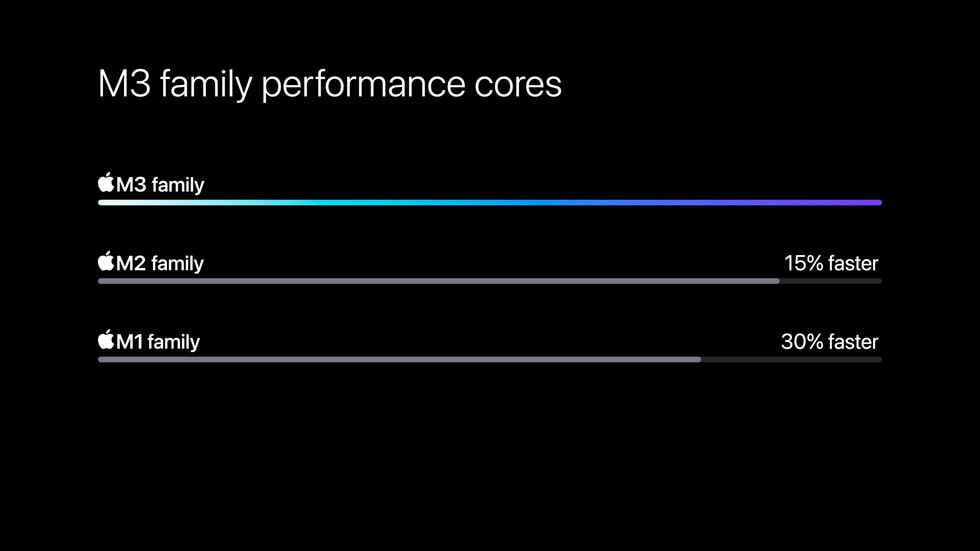
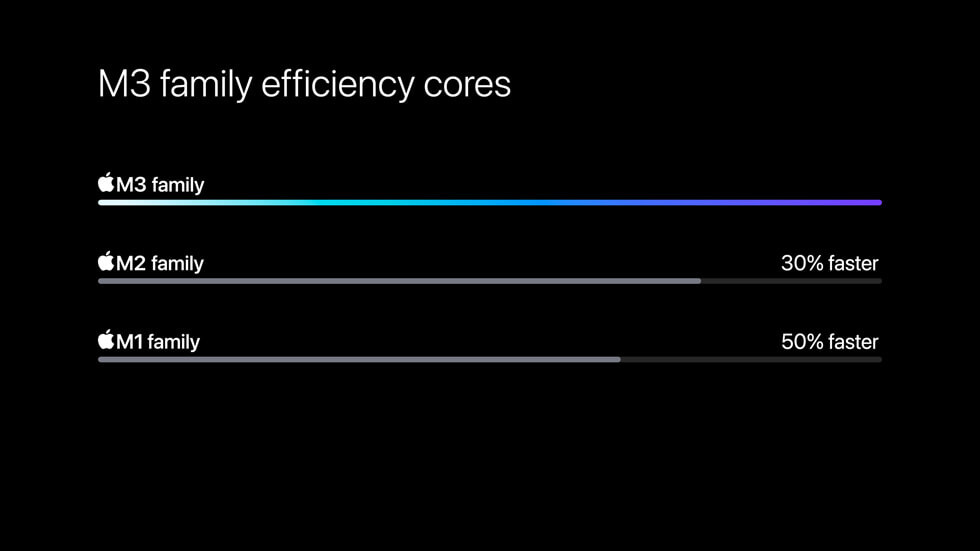
The next-generation CPU in the M3, M3 Pro, and M3 Max chips features architectural improvements to both the performance and efficiency cores. The performance cores are 30 percent faster than those in the M1 family, enabling faster tasks such as code compilation and audio processing. The efficiency cores are 50 percent faster, ensuring faster everyday tasks while maximizing battery life. The CPU delivers the same multithreaded performance as the M1 chip while using less power, and offers up to 35 percent more performance at peak power.
Unrivaled Unified Memory Architecture and Custom Engines
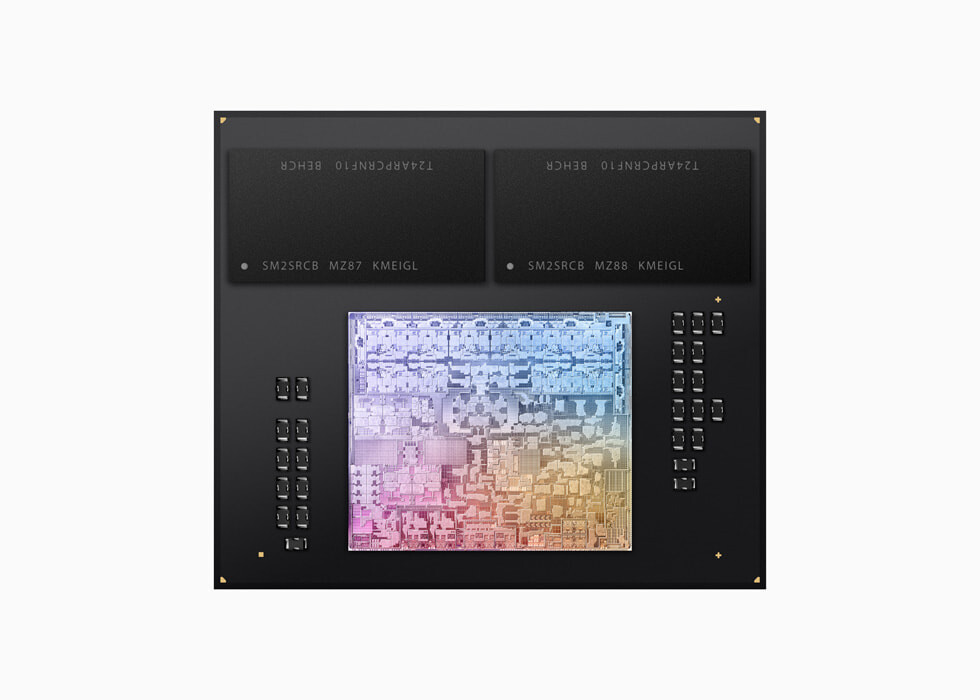
The M3 family of chips incorporates a unified memory architecture, providing high bandwidth, low latency, and exceptional power efficiency. This architecture allows all technologies within the chip to access the same data without the need for data copying, resulting in improved performance and efficiency. The M3 chips also feature custom engines for AI and video processing, with an enhanced Neural Engine that is 60 percent faster than the Neural Engine in the M1 chip family. The media engine provides hardware acceleration for popular video codecs and introduces support for AV1 decoding, extending battery life during video playback.
M3, M3 Pro, and M3 Max: Phenomenal Performance for Different User Needs
The M3 chip features 25 billion transistors and a 10-core GPU, offering 65 percent faster graphics performance compared to the M1 chip. The M3 Pro chip includes 37 billion transistors and an 18-core GPU, providing extremely fast performance for graphics-intensive tasks. The M3 Max chip pushes the transistor count to 92 billion and features a 40-core GPU, delivering the highest level of performance for demanding professional workloads. All three chips support unified memory, with the M3 Max supporting up to 128 GB of memory for AI developers working with large transformer models.
Environmentally Friendly Design
The power-efficient performance of the M3 chips contributes to the energy efficiency of the new MacBook Pro and iMac, aligning with Apple's commitment to environmental sustainability. The new MacBook Pro achieves the longest battery life ever in a Mac, lasting up to 22 hours, reducing the need for frequent charging and minimizing energy consumption over the device's lifetime.