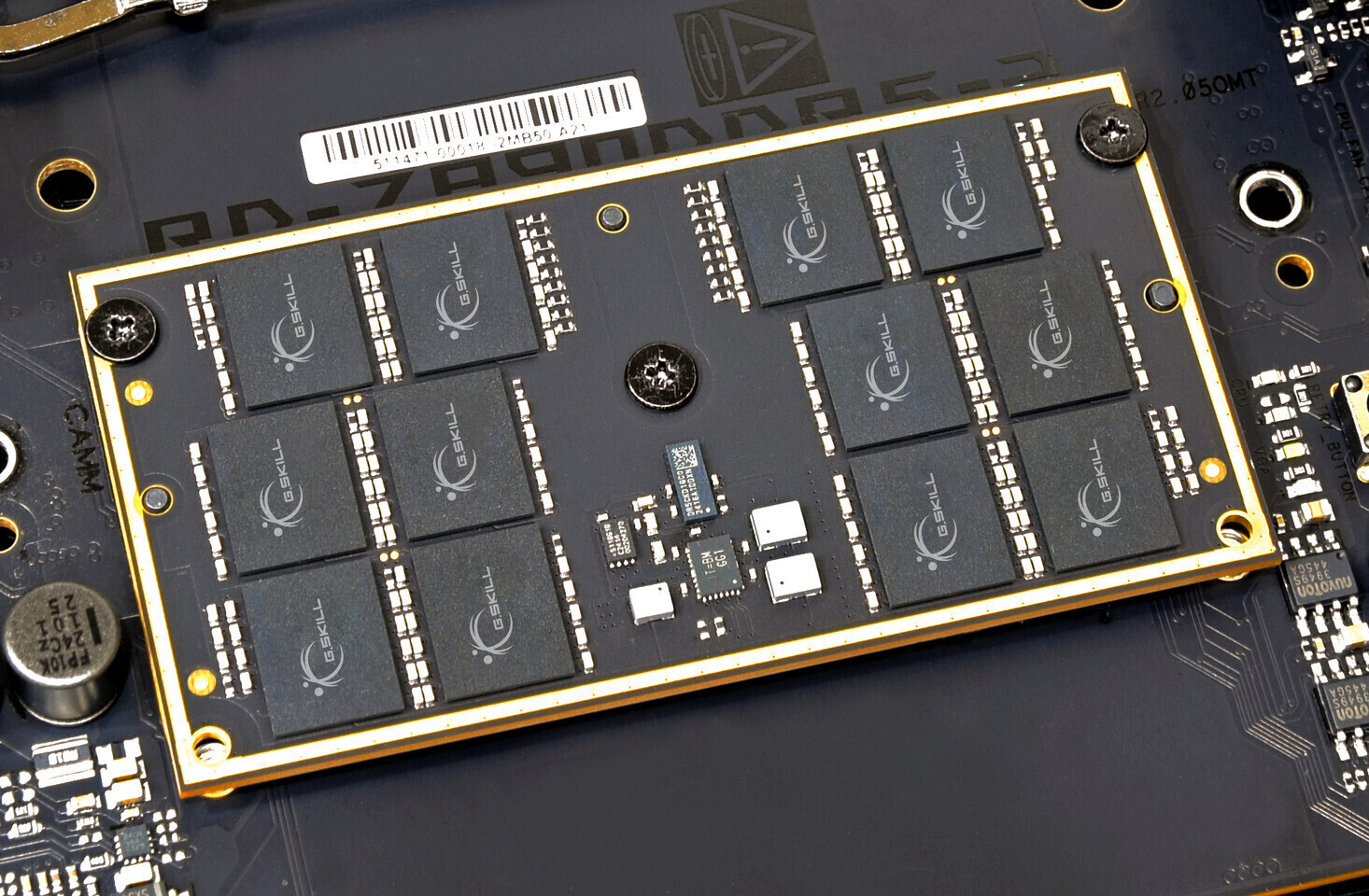
The semiconductor industry is making significant progress in developing next-generation memory, with the DDR6 standard on the horizon. While consumers may not see these modules until 2027, major players like Samsung, Micron, and SK Hynix have already moved beyond the prototype phase and are undergoing rigorous validation processes. Teaming up with Intel, AMD, and NVIDIA, they aim to achieve an initial throughput of 8,800 MT/s, with plans to eventually reach an impressive 17,600 MT/s, nearly doubling the speed of current DDR5 technology. This speed boost is made possible by DDR6's 4×24-bit sub-channel architecture, which requires new signal integrity approaches compared to DDR5's 2x32-bit structure. To address the physical limitations faced by DIMM form factors at higher speeds, the industry is banking on CAMM2 technology. Early indications suggest that server platforms will be the first to adopt DDR6, with high-end notebooks following suit once production ramps up.
Behind the scenes, a timeline is being established: platform validation is scheduled for 2026, server deployments in 2027, and wider consumer availability thereafter. This phased rollout is similar to the introduction of DDR5, but experts believe that DDR6's architectural advancements could accelerate its adoption in AI and high-performance computing settings. However, the cutting-edge nature of this technology comes at a cost: initial DDR6 modules are expected to be priced similarly to DDR5 modules at their launch in 2021, potentially limiting early adoption to large data centers and AI research facilities. Nevertheless, memory manufacturers are eager to launch DDR6 as soon as possible to meet the growing demand for bandwidth in HPC and AI applications. By 2027, CAMM2-based modules operating at DDR6 speeds could become the new standard for high-performance systems.